Monday, March 28, 2016

Ronda: The not so "pueblo" Pueblo Blanco

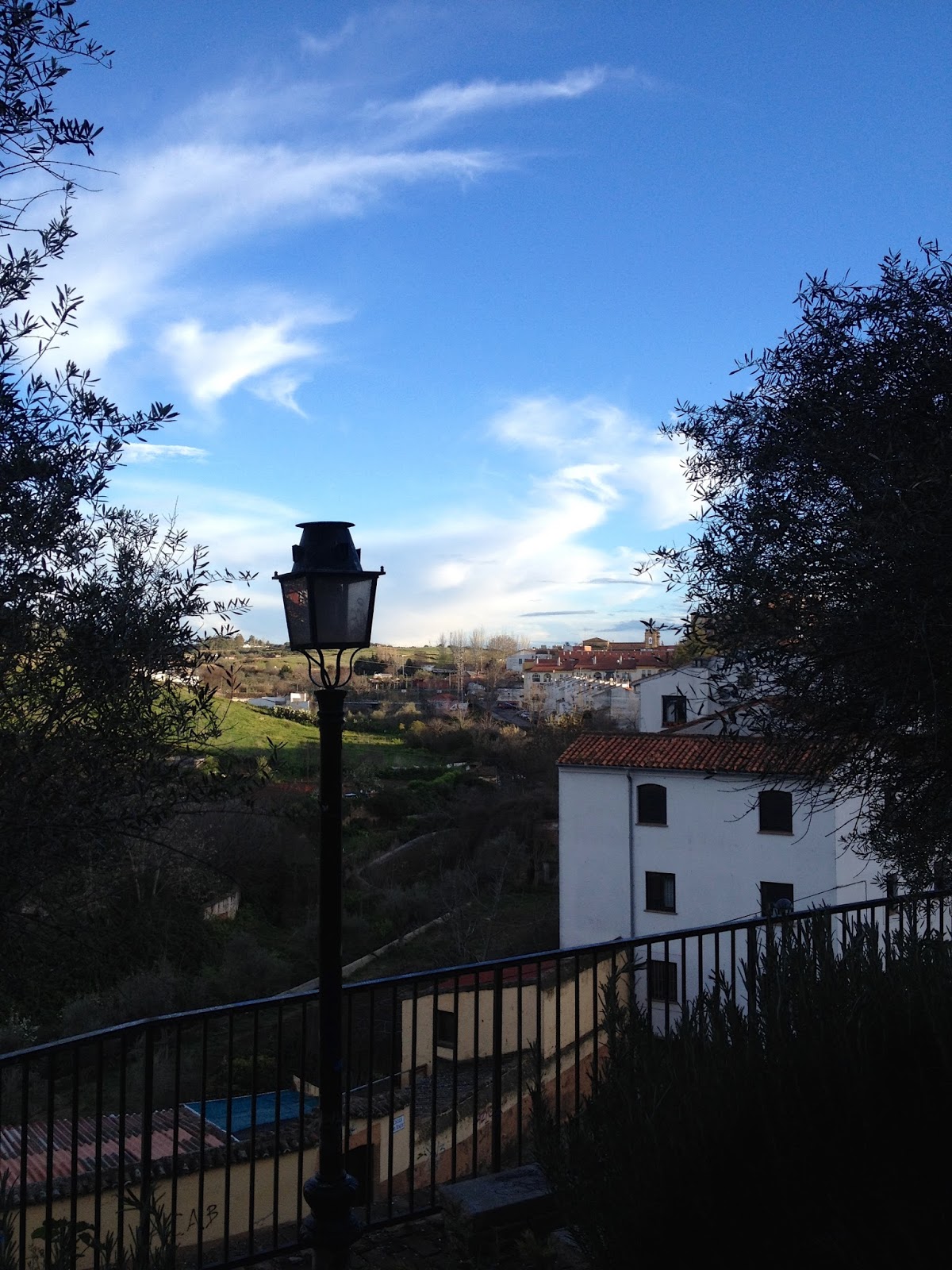
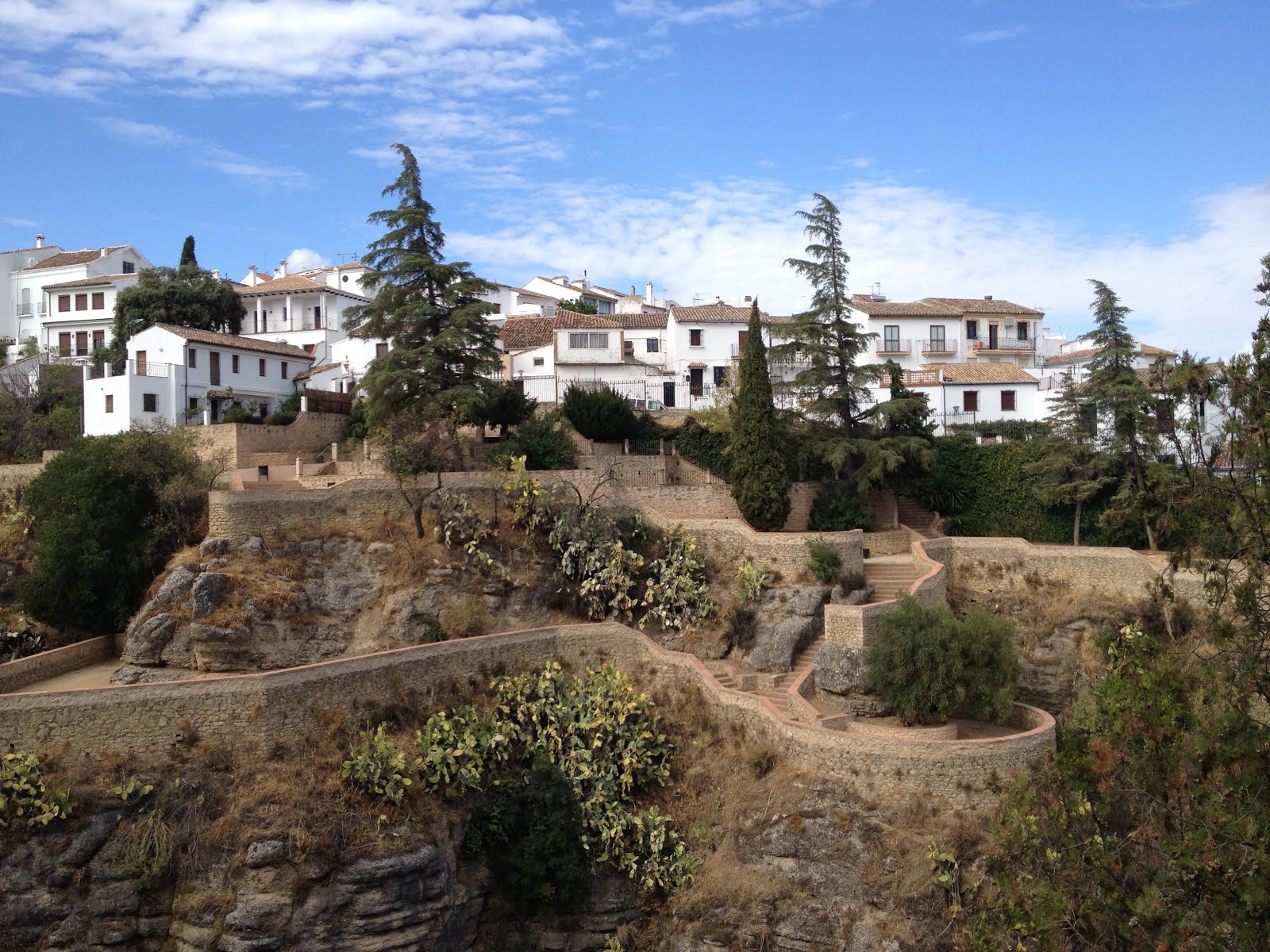
The Pueblos Blancos (white villages) of Spain's southern region Andalusia are celebrated for their indescribable beauty.  One of the most famous Ronda has a long and intriguing history.  Originally founded by the Celts in the 6th Century BC, the city changed hands multiple times before being conquered during the Christian Reconquista of the peninsula in 1485.

The name "pueblo" usually brings to mind images of quaint country-side villages and hidden-away treasures.  Ronda, however, doesn't seem to have a very "pueblo" feel to it.  It is a huge tourist attraction, and in reality isn't that small (with a population over 35,000).  Despite all this, the warm Andalusian sun and the spectacular landscape still overwhelm the visitor with a feeling of tranquility.


If you're looking for a warm getaway still sprinkled with typical Spanish culture and flair, this city may just be for you!  While it is possible to find the stereotypical attractions one expects when traveling to the south of Spain (Flamenco dancing, warm weather, and gazpacho, to name a few) Ronda still offers various cultural and historical elements which will educate as well entertain the enthusiastic visitor.

The main sight in Ronda is hard to miss, as you will need to cross it to enter the old zone of the city.  The Puente Nuevo (New Bridge) is a massive stone construction standing 390 feet above the floor of the canyon it crosses.  The name is somewhat misleading, because even though it is the newest of the three bridges found in the city, it's not that new by modern standards, being completed in 1793.


If you're feeling adventurous, and want to get some amazing views of the Puente Nuevo (see above) there is a little trail (easy to find) which will lead you down into the gorge.  Being that it gets hot pretty quickly in Ronda, it's a good idea to plan this outing for the morning, as the hot afternoon sun will not make it any easier.  

Want to experience some traditional Spanish culture?  Well, Ronda is a great place to see a bullring up close and personal.  The oldest bullring in Spain, completed in 1784 is another famous landmark of the city.  


Another famous destination in Ronda is the Arabic Baths.  They date back to the 13th Century.  They are located a little outside of the center, so be prepared to walk for a little (about 10-15 minutes) and up and down a few hills along the way! 


If you wish to continue your journey into the rich Arabic historical influences in the city, the "Palacio del Rey Moro" (Palace of the Morrish King) is another historical landmark.  Within the Palacio, you will find the Secret Mine.  Legend has it that Muslim King Abomelic built this structure back in the 14th Century.  It's rumored that the mine contains hidden houses, palaces, bathing chambers, among other things.  


From the entrance to the Palacio del Rey Moro, you can get some amazing views of another famous Ronda sight, the Hanging Gardens.  This national monument was designed and installed in 1912, and during the peak growing seasons is absolutely stunning.  Unfortunately, we made our trip to Ronda during the end of the blooming period, so we weren't able to enjoy the gardens in all of their glory.  The views, however, are still spectacular.  


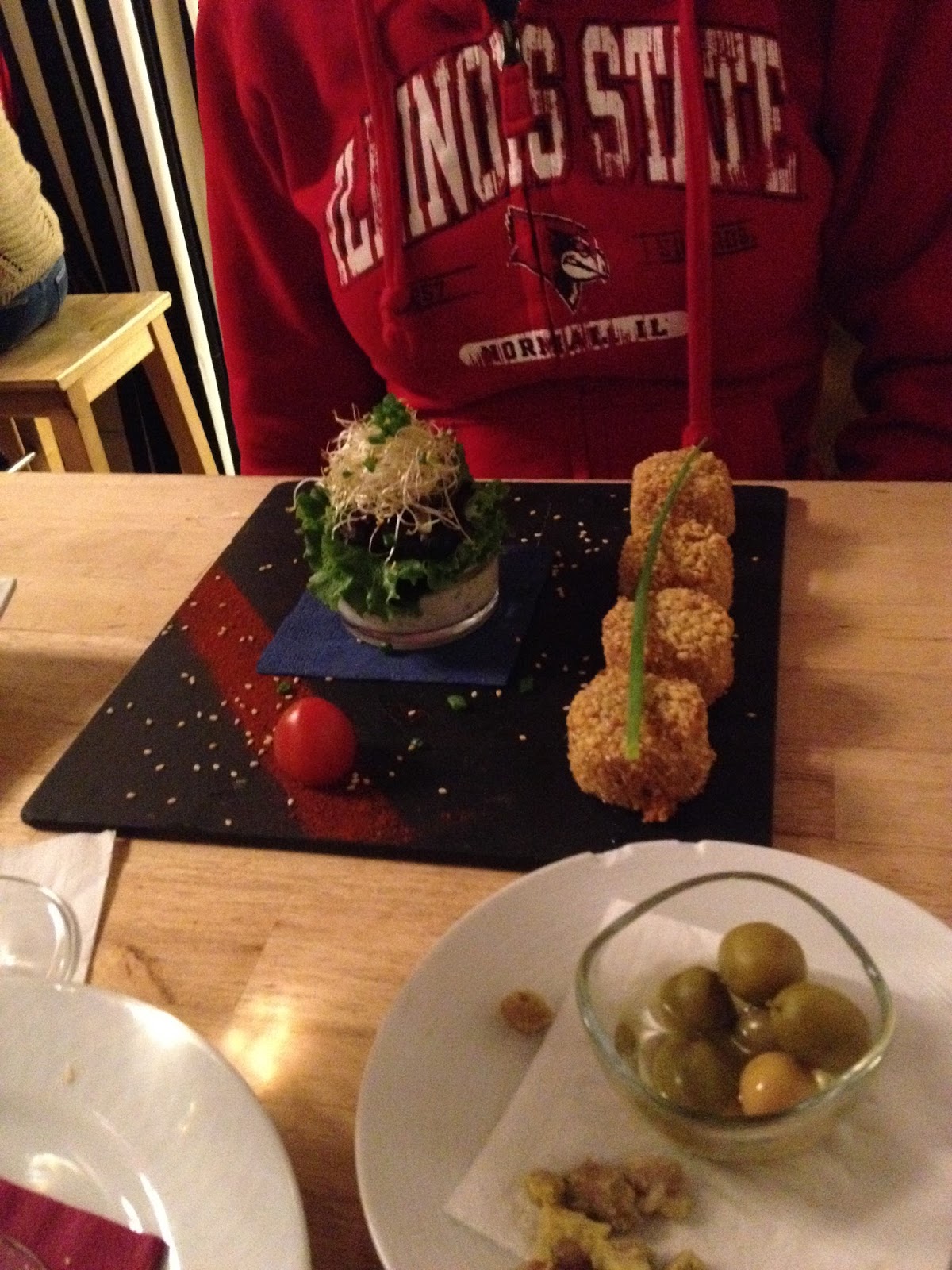
Like the lovely Spanish city that it is, Ronda has some great food and a very unique tapa culture.  If you're looking for somewhere to relax and have a bite to eat after a busy day of sight-seeing or a relaxing afternoon of strolling through the winding, hilly streets, the Plaza del Socorro is a great place to start.  Order a plate of "tapas mixtas" or try a combination of hot and cold tapas (usually sold in a bundled package- 2 each for 6 euros for example) and enjoy sitting at one of the many outdoor terraces, taking in the view and Spanish sun.  


Ronda is a perfect destination for anyone looking to enjoy the relaxing Spanish culture, breath-taking landscape, and delicious gastronomy!  While it is often crowded with tourists, the city itself still has its own unique charm and personality.  With various monuments and landmarks that highlight the different historical and cultural elements that have gone into the formation of the city, the visitor can experience not only the ancient past with the Moorish influences but also the more recent and stereotypically traditional side of Spain.  A trip to this not so "pueblo" Pueblo Blanco can be both relaxing and exciting, educational and delicious, and will not disappoint any visitor eager to see this romantic and overwhelmingly beautiful side of the country.  

Saturday, March 26, 2016

Cáceres: A Historian's Dream and a Foodie's Paradise

Located in the south-western region known as Extremadura, Cáceres is a truly hidden gem of Spain.  With thousands of years of history, and some of the best cuisine in the peninsula, the city has something for everyone!

Dating back to 25BC, the city of Cáceres has a rich and full past.  It has changed hands and even names various times.  Originally known as Caesarina during the Roman occupation, and Hizn Qazriz under the Arab rule, the city fell into the hands of the Christians during the Reconquista in 1229.  It was then that it was given the name it boasts today, which still contains clear connection to the city's extensive history.  During the period of history in which Spain as a country flourished greatly, the discovery of America, Cáceres also saw an influential period of growth.  Many families who returned from their voyages to the New World used their newly found fortunes to build homes and small palaces there.

The city has various interesting and notable museums and sights that will certainly hold an allure for anyone with an interest in history.  For only 2.50 Euros, you can get a ticket to go up into the Torre de Bujaco, located directly off the Plaza Mayor.  From there, you will get amazing views of the Plaza and landscape surrounding the city.


For an additional 50 cents, you can get a bundled package to also visit the Torre de los Pozos, located in the Jewish Quarter of the city.  The views aren't as good as those from the Torre de Bujaco, but the museum is interesting and educational.  There is also a free museum located near the Jewish Quarter, the Museo de Cáceres, which outlines the complex and interesting history of the city itself.  

However, if you don't feel that spending your days walking through museums and monuments is something you find interesting, just taking a simple stroll through the winding streets will still leave you saying "whoa!"  The breath-taking Casco Antiguo has been declared a UNESCO world heritage site, and is well worth the praise.  When walking through the old zone, it's hard not to feel that you've been transported back in time.  There is absolutely no graffiti to be found, and the very low number of tourist shops and stalls keeps the authentic feel in the air.  If it weren't for the cars which pass by occasionally, you may find yourself actually believing you've been sent back to the 15th or 16th century.  


Some of the prettiest places in the city are the Plaza de Santa María and the Plaza de San Jorge.  

In the Plaza de San Jorge

In the Plaza de Santa María 
No trip to Cáceres would be complete without sampling the amazing and renowned cuisine.  Like many Spanish cities, Cáceres has its very own tapa culture.  It's unlike any that I've experience before.  While in cities such as Bilbao, where the tapa scene is still famous and delicious, you will find that tapas are generally small, and it's expected that you will bounce around from one place to another sampling little portions of lots of things as you go.  However, in Cáceres, the tapas are huge, and it's true that they cost more (on average 5-6 euros each), but if you go with other people and each order something different you'll easily and happily be able to share.  As a warning, these places fill up quick, and it's a good idea to go ahead of time, get your seat saved, and fill up in one place!  And make sure you're aware of what time it is when you go.  Most places don't start serving lunch until around 1:30pm, then close the kitchen around 4pm, and don't open again for dinner until 8 or 8:30 that night.  

I could give a long list of wonderful places to eat, but wandering into somewhere new and discovering it for yourself is half the fun.  But, I will mention two places that I personally think shouldn't be missed. 

The first is Restaurante Tapería Ibérico.  (Be careful, a lot of places have the name "tapería".  This is more a way of letting you know they're a tapas place, so be sure if you want to go to this one, you check the name twice.)  It's located in the Plaza de San Juan, and the food, service, and atmosphere are all top notch.  The downstairs is a bar, but upstairs you can be seated in a quaint and small dining area, where you will be waited on by friendly, enthusiastic waiters dressed in suspenders and bowties.  Here, my hubby and I tried the typical Extremeño dish "Migas".  "Migas" means "bread crumbs" and that's essentially what this dish is, except a million times better.  They are warmed and cooked with little pieces of chorizo, and melt in your mouth.  We also tried a Brocheta de Pollo (chicken skewers) and had a glass of wine each, and total spent13 Euros. 

Migas

Brochetas de Pollo

Our favorite place, by far, was the Cacharrería.  It's a classy, inviting little tapas restaurant that fills up quick!  Fortunately we got there early, because 15 minutes before it opened a line started forming at the door.  The place is small, and probably seats about 50 people total.  We spent over an hour and a half there, and didn't mind a bit.  Here, we tried the Puntas de solomillo (a pork dish) the Falafel, and literally the most amazing cheese plate I've ever had!  (Extremadura is famous for their local cheeses).  This, plus four glasses of wine brought out total to 31.70 Euros, and it was well worth it!

Puntas de Solomillo

Falafel

Cheese Plate

Let me take a moment and go back to speaking to the history buffs.  While Cáceres is a historical adventure in itself, if you're looking for an easy way to fill a day, a quick trip to the nearby city Mérida is right up your alley.  This city boasts some of the most remarkable Roman ruins in Spain, and while the old zone isn't as impressive as that of Cáceres, the experience is still awe inspiring.  Visitors have the option of choosing different types of tickets which will give you access to anything from everything to just the important basics.  Being that we didn't have more than a few hours to spend in the city ourselves, we got the basic entrance.  We were able to see the Teatro and Anfiteatro. For free, near the train station, you can also find the remains of an old aqueduct.  It's nowhere near as well preserved as that of Segovia, but it's still an impressive sight.

The Anfiteatro, constructed during the 1st Century AD, is where the ancient Romans held their entertainment which took place in the form of gladiator battles. 

In the Anfiteatro


Constructed between 15 and 16 BC, the Roman Teatro is simply magnificent.  Here, the people would gather for plays and other theatrical performances.  Today, the Theater is still used during the Festival of Classical Theater.  

The Teatro Romano


Other sites in the city are the Aqueducto, which I mentioned previously, and the Temple of Diana.  

Templo de Diana

The Aqueduct 

A trip to Cáceres may not appear at the top of most people's lists of places to see in Spain, but the hidden jewel of Extremadura will surely not disappoint.  With amazing food, breath-taking architecture and palpable history, this city is truly one of the most impressive Spanish cities I have been in.  The people are kind and even the friendly local on the street will stop to give you recommendations on the best places to eat.  If you're looking for a chance to get to know Spain historically or gastronomically this place is for you!

In the Plaza Mayor

In the Plaza Mayor

Friday, February 19, 2016

Salamanca: Two cathedrals, one frog, and a whole lot of history

But come on, how could you not
love a city that looks like this.?!
Before I write this post, I should give a quick disclaimer.  Salamanca is, for me, the place in Spain which has had the most impact on my life.  After spending two and a half years there, I developed a love for the city which will never go away.  So, I'm probably more than a little biased, but, I will try to keep this post in line with my previous ones, and not glorify the city too much (although, it doesn't need me to do that, it's amazing in its own right).  

Located in the region of Spain known as Castilla y León, Salamanca houses the oldest university in the country, and the 4th oldest in the world.  Dating back to 1218, the University of Salamanca has a very rich history.  The major river running through the city the Rió Tormes has been immortalized in Spanish literature as the birthplace of Lazarillo de Tormes.  Although the story is fictional, and has an author unknown, the 16th century story has found its way into the hearts of Spaniards, and anyone who loves and studies Spanish literature would be deft to not be familiar with the story of the poor Lazarillo as he works his way through adolescence into manhood in a trying time in Spanish history.  The story follows the protagonist through various locations in Spain, but legend has it that he was born in Salamanca, in the Rió Tormes, and the city has a statue commemorating his exit of the city with "el ciego" (the blind man) on the way to begin his life-long adventure.


There are several attractions that draw visitors to Salamanca.  The first, and most obvious, is the University.  Originally founded in 1134, but not given an official charter until 1218, the Universidad de Salamanca has the fame of being the place where language was first studied and encouraged.  But the impact that this institution had did not stop there.  It was at the Universidad de Salamanca where Columbus would lobby for support of his journey which would ultimately lead him to the Americas.


While all of the history of the Univestity is impressive enough in its own right, there are some specific traces which have been carried over into modern times.  The most notable of these being the "rana" or "frog".  Hidden in the historic facade of the University, legend has it that if you can find the frog you will either 1)pass your exams or 2) fall in love.

The facade
Picture taken from
http://ratkoscorner.deviantart.com/art/Universidad-de-Salamanca-184293383

A little bit of a closer look.
Can you find the frog?
The most famous of the "facultades" or departments of the University is the "facultad de filología" or the Philology Department, where students study languages, literatures, and cultures.  Located in the center of the city, the three buildings making up this department can be found right next to the cathedral.


The "old zone" or "casco antiguo" in Salamanca is smaller than in other cities, but this doesn't mean that it's lacking in charm.  When walking around the city, one would be hard pressed to not be overwhelmed by the beauty, cobblestone streets, historic buildings, and ornate facades decorating the churches.  Starting out in the Plaza Mayor, considered one of the prettiest plazas in all of Spain, the visitor to this city will immediately understand why this city has been called "la ciudad dorada" or "the golden city".  The sandstone which was used in the construction of many of the historic buildings gives off a soft glow when illuminated at night all around the "casco antiguo".  The Plaza Mayor is one of the best examples of this.


The plaza is surrounded by shops and cafes, and on a warm spring or summer day, the terraces have their tables out and people come out to sit with friends or family and enjoy a café con leche or a caña.  Although enjoying your coffee in the Plaza Mayor adds a certain charm to the morning, it should be noted that in the Plaza, prices are often twice or even three times what you would pay in other spots around the city.  Regardless, a trip to Salamanca wouldn't be complete without a relaxing afternoon drink in the heart of the city.

Exiting the Plaza through one of the arches directly across from the clock will bring the visitor even deeper into the "old zone".  There, you will find the entrance to the "Rúa", the historic street leading from the Main Square to the Cathedral.  Along this street you will find restaurants and tourist shops.  It's always a bustling street, with tourists, students, and Salmantinos rushing from one place to another.


More or less half-way between the Plaza and the Cathedral is the "Casa de la Conchas" or the Shell House.  Simply seeing it will tell you why it's name is very adequate.  Covered in the Concha normally associated with the Galician city Santiago de Compostela, this historic building was constructed from the end of the 15th to the beginning of the 16th century.  Originally belonging to a professor of the University of Salamanca who was also knighted in the Order of Santiago de Compostela (hence the shells) the building now houses a public library.


In front of the Casa de la Conchas is another University, la Universidad Pontificia.  Historically a religious school it is now a private university.  While not as well-known and renowned as the Universidad de Salamanca, this building is still worth a visit.  There are two towers which make up the main facade of the university, and these are open to the public!  For a small price, visitors can climb to the top, and get amazing views of the entire city.


Continuing down the Rúa brings you to the Cathedral, or better said "Cathedrals".  Another aspect that adds to Salamanca's fame is that it doesn't have one, but two cathedrals.  However, if you were to look for both of them, you may be hard pressed to find them.  They are actually built one on top of the other.  The Old Cathedral was built between the 12th and 14th centuries.  However, when the construction of a new, updated cathedral was started in the 16th century, instead of completely tearing down the Old Cathedral to build the new, the New Cathedral was simply added to the new.  Although it is true that in almost every cathedral around Spain construction and "updates" were made to the original building, what makes this one different is that instead of simply changing the architectural style of the old, an entire new cathedral was constructed.

One of the best ways to see the inside of the Cathedral isn't actually through the front door.  Around the corner on the back side of the Cathedral is access to what is called "Ieronimus".  This is another tower tour, and I should warn you, that it involves walking up a lot of stairs. It is worth it though, when you are given views of both the Old and New Cathedrals, the roof tops, and the surrounding city.  At night there is a special tour, in which the cathedral is illuminated, and a guide gives an explanation of the various rooms and artifacts that are located throughout.


The magic of this city does not stop at the end of the Rúa.  On a nice, sunny afternoon, one of the best ways to get amazing views of the entire city (for free!) is to cross the historic Roman Bridge (Puente Romano), and walk along the running path on the other side of the river.  Stopping at a "bocadillo"  shop on the Rúa on your way and grabbing a sandwich of Spanish Ham on a baguette makes for a great picnic, and the benches lining the river provide the perfect place to relax and enjoy the sites!

Spanish Ham (still on the leg)


View of the Cathedral from the other side of the Río Tormes

If you're feeling up to it, there is a small shack on the edge of the river which offers paddle boats that can be taken out and used for up to an hour.  Fair warning, however, if it is a hot, sunny day, there is almost no way of finding shade while out on the river, except, of course, for when you go under the bridges.

Paddle boats

While Salamanca may seem small, it has a lot to offer!  Walking around the city, you will find various museums, gardens, and cafés filled with yummy tapas just begging to be tried.  As is true with almost every city in Spain, the magic comes in discovering it for yourself, in getting lost along the winding roads, and stumbling upon a café or some other hidden away treasure.  With this post, my main goal is to spark the interest of eager travelers to add this city to their list of destinations.  Whether you spend a day or a week in the Golden City, you will see why this city makes its way into the hearts of all who visit.  As Cervantes said, "... Salamanca que enhechiza a voluntad de volver a ella a todos los que de la apacibilidad de su vivienda han gustado."


Sunday, January 3, 2016

Reflecting on Spain from the Outside

This post won't be long.  It's going to be more of a running list of things I've noticed which make Spain different than other places I've been.  I've done something like this previously in my other blog.  However, after a recent trip to other European countries (Czech Republic, Austria, and Hungary) I've noticed a few aspects of Spanish culture which I didn't appreciate until now.

*Click Here to read my previous blog post*

To begin with, I have to admit that I expected to visit other European countries and be blown away by their efficiency and manners (being that Spain doesn't have the best reputation in these areas).  However, I was surprised by how wrong I was!  While in Austria I was impressed at the honesty and integrity of the people, in the Czech Republic the customer service was AMAZING, and in Hungary everyone we came across was happy and helpful, there were still aspects of Spanish culture which I found lacking in these places.

To begin with, smoking has been illegal in restaurants and bars in Spain for as long as I've been here (since 2012) and if I'm not mistaken, the law was in place for a little over a year, maybe more, before that.  However, in both the Czech Republic and Hungary restaurants and bars still had smoking sections.  And, I should mention that they weren't always in a little room in the back of the place.  In one specific bar we went to, you had to walk through the smoking section to get to the non-smoking area upstairs.

In addition, Spanish people are generally always conscientious of who's turn it is when standing in lines.  It is very common to hear Spaniards walk into a bank or the post office (where the line is always very long) and ask "Who is last in line?".  Now, to a foreigner walking into this situation, and not understanding the system, it may seem like Spaniards don't understand how lines work.  Often times, after knowing who is in front of them, it's not uncommon to see someone find a chair, and sit down, waiting until their turn to go to the front of the line.  Other times, it seems like just a crowd of people.  But be sure, they all know when their turn is.  This is something that I found a little different in Austria especially.  It could be because we were around mainly tourists who were probably rushing to get into the attraction or get their food.  However, it made me appreciate this aspect of Spanish culture more.

And the last thing I have found to be different in Spain than anywhere else I've been has to do with the unspoken manners which people uphold on public transportation.  You will almost NEVER see a Spaniard recline their chair on a bus or train (and if they do, they will ask the person behind them before they do).  The only time a seat is reclined is if there is no one behind them, and when someone does sit there, their chair will be put back to the normal position.  I have grown to really love and appreciate this.  I would rather sit with my chair straight up, than with someone's head in my lap on a 4 hour bus ride.

Well, I think that will be all for now, but as I travel and appreciate different aspects more, I will be sure to add them to this post.